
Custom UAV Propulsion Systems: Engineering Tailored Power for Commercial Drones

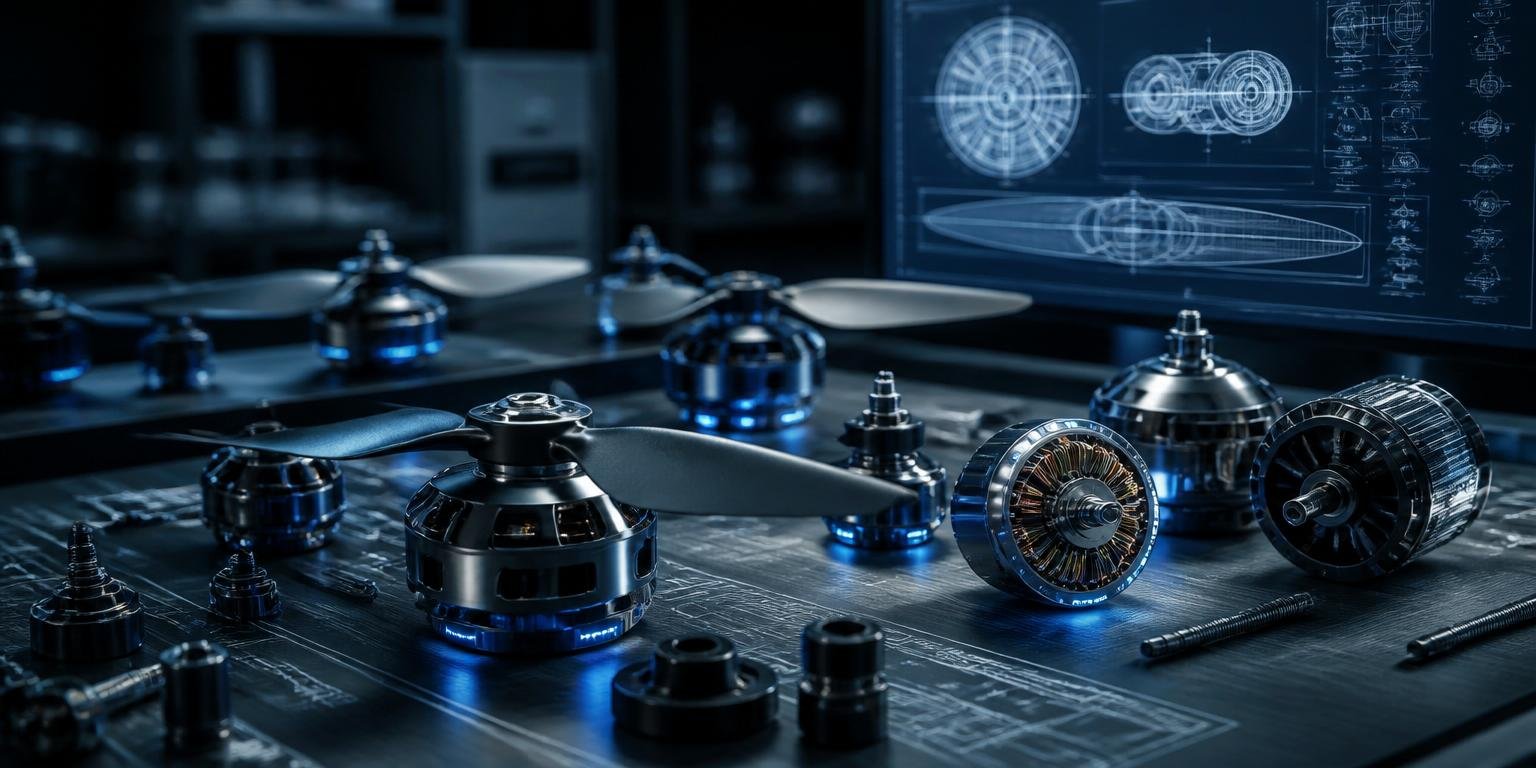
The commercial unmanned aerial vehicle (UAV) market is expanding rapidly beyond off-the-shelf solutions. Today, specialized applications such as heavy logistics, precision agriculture, offshore inspection, and defense require drones with highly tailored performance profiles. To meet these rigorous demands, drone manufacturers are turning away from generic components and actively investing in custom UAV propulsion systems.
A drone’s propulsion framework—comprising motors, electronic speed controllers (ESCs), propellers, and power management units—defines its flight boundaries. Consequently, customizing these core components ensures that an airframe reaches its full potential in payload capacity, flight endurance, and operational safety.
In this comprehensive guide, we analyze the engineering necessity, core components, design challenges, and integration benefits of building fully customized propulsion systems for industrial drones.
Why Off-the-Shelf Propulsion Systems Fall Short
Standard propulsion packages work well for general photography or lightweight mapping drones. However, enterprise missions introduce unique environmental and mechanical constraints that off-the-shelf hardware cannot handle:
- Sub-Optimal Energy Conversion: Generic motor-propeller combinations rarely operate at peak efficiency across custom payload weights, leading to wasted battery capacity.
- Environmental Vulnerability: Standard commercial motors lack specialized protective coatings, making them prone to failure in marine, dusty, or high-altitude environments.
- Firmware Disconnect: Mass-produced ESCs often utilize generic control loops. As a result, they may suffer from slow throttle response or sync loss during sudden gusty conditions.
By developing custom UAV propulsion systems, aerospace engineers eliminate these operational bottlenecks and optimize every watt of electrical power.
Core Components of Custom UAV Propulsion Systems
Building a tailored propulsion system requires seamless engineering across four interconnected hardware categories:
1. Custom Brushless DC (BLDC) Motors
Motors serve as the primary mechanical drivers. Customization at the motor level involves adjusting stator dimensions, copper winding wire thickness, and KV values to match precise voltage inputs and rotor speeds. Furthermore, engineers can specify custom mounting patterns, integrated cooling channels, and high-temperature neodymium magnets.
2. Tailored Electronic Speed Controllers (ESCs)
ESCs translate flight controller commands into precise electrical current. Custom ESC engineering focuses on optimizing MOSFET heat dissipation, integrating Field-Oriented Control (FOC) algorithms, and flashing custom firmware. Consequently, FOC technology dramatically reduces motor acoustic noise while raising operational efficiency by up to 15%.
3. Matched Carbon-Fiber Propellers
Propeller design directly dictates thrust output and aerodynamic noise. Therefore, custom propeller geometry—including blade pitch variation, custom airfoil profiles, and carbon-fiber layup density—allows engineers to maximize static thrust for heavy lifting or optimize high-speed cruise efficiency.
4. Integrated Smart Power Management
Custom power distribution boards (PDBs) and telemetric sensors continuously monitor voltage draw, current spikes, and motor temperatures. As a result, flight controllers receive real-time health diagnostics to prevent catastrophic mid-air battery collapse.
Key Benefits of Tailored Propulsion Systems
Investing in custom propulsion engineering delivers direct measurable advantages for enterprise drone fleets:
| Performance Metric | Generic Propulsion Setup | Custom UAV Propulsion Systems |
| Flight Endurance | Baseline standard flight time | $15\% – 30\%$ extended operational endurance |
| Throttle Response | Standard linear control curves | Ultra-fast FOC response with zero sync loss |
| Environmental Protection | IP40 to IP43 (Basic dust protection) | Fully sealed IP56 to IP67 water/dust proofing |
| Thermal Dissipation | Passive cooling / prone to heat buildup | Active centrifugal or liquid-cooled channels |
| System Reliability | Standard MTBF ratings | High MTBF with redundancy safeguards |
Step-by-Step Development Process for OEM Builders
Designing a custom propulsion framework requires a structured engineering approach from initial concept to mass manufacturing:
- Mission Requirement Mapping: Engineers define total takeoff weight (MTOW), target payload mass, maximum cruise speed, and required hover endurance.
- Dynamometer Bench Testing: Specialized dynamometers test various motor windings, prop pitch angles, and voltage levels to collect empirical data on thrust-to-power ratios ($\text{g/W}$).
- Firmware and Algorithm Tuning: Developers calibrate ESC acceleration ramps and dynamic timing angles to match the motor’s internal inductance.
- Environmental Stress Screening: Prototype propulsion sets undergo thermal chamber testing, vibration analysis, and saltwater spray exposure to verify durability.
Frequently Asked Questions (FAQ)
Q: What is the main advantage of Field-Oriented Control (FOC) in custom propulsion?
A: FOC provides precise vector control over motor magnetic flux, resulting in smoother acceleration, significantly lower operational heat, quieter flight, and higher power efficiency compared to standard square-wave ESCs.
Q: How does custom motor winding impact drone performance?
A: Custom winding allows engineers to tailor the motor’s exact torque curve and KV rating. Consequently, the motor delivers maximum torque at the exact RPM range where the chosen propeller is most efficient.
Conclusion
Developing custom UAV propulsion systems is essential for commercial drone developers seeking a competitive edge in today’s demanding market. By harmonizing custom-wound motors, FOC-enabled ESCs, and matched carbon-fiber propellers, OEM manufacturers can deliver industrial drone platforms that achieve longer flight times, superior thermal stability, and uncompromising reliability.